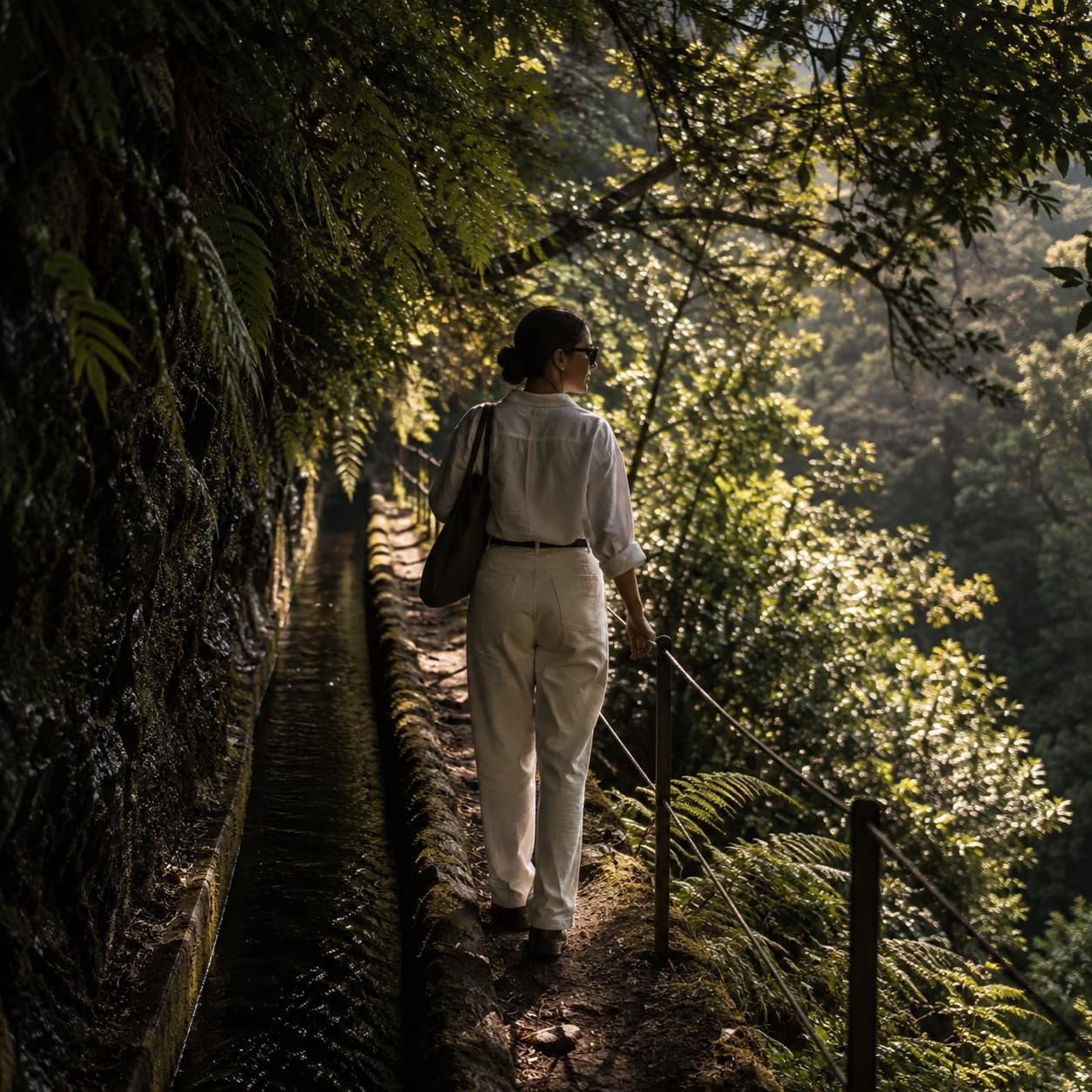
The path is the width of a garden gate and it has not climbed a metre in half an hour. On your left, a channel of clear water slides along at the pace of a slow stroll. On your right, a valley full of laurel trees. According to every guidebook, you are hiking. Your heart rate disagrees.
Here is the sentence that never makes it into those guidebooks: most of Madeira's famous levada walks are flat. Not rolling, not gentle. Flat. If the word hiking makes you think of boots, poles, sweat and a summit photograph you did not really want, this article is for you. You can skip the boots. You can skip the summit. You should not skip the levadas.
Levada walks in Madeira: the short answer
A levada is an irrigation channel with a maintenance path running beside it. Because the water crosses the island almost level, the path does too. If you can walk a seafront promenade for two hours, you can walk a levada. Trainers are fine on the easy ones. Mornings beat afternoons. Start with Balcões.
What a levada actually is
The problem was born with the island. The north side of Madeira catches the Atlantic weather and drips with it. The south side has the sunshine, the shelter and the farmland, and nowhere near enough water. The settlers' answer, begun in the earliest centuries of settlement and still growing in the twentieth, was to cut channels along the cliffs and through the rock, by hand, and let gravity make the deliveries.
Locals will tell you the network runs to more than fifteen hundred kilometres. Treat the figure as folklore if you like. What is certain is that it is a web of channels built across five centuries, and that it still works. The water beside you is not decoration: it is on its way to banana terraces, vineyards and turbines, and the path exists so that the levadeiro, the keeper of the channel, can do his rounds. You are a guest on working infrastructure. That is half the charm.
The golden rule: follow the water
Water does not climb mountains. The men who built the levadas gave each channel the gentlest possible fall, just enough to keep the water ambling, and the maintenance path holds the same line. Which gives you the only rule you need: if the water beside you is walking, so are you. Flat channel, flat path, flat afternoon.
The honest footnote: reaching a levada is sometimes another story. A few famous walks begin with a proper descent to the channel and end with the same climb back. And Madeira's veredas, the mountain footpaths with Pico in the name, are a different sport entirely: magnificent, and precisely what you were promised you could avoid. Read the name before you commit. Levada, level. Vereda, verticality.
Water does not climb mountains. Follow it, and neither will you.
Levada dos Balcões: the one to do first
Start at Ribeiro Frio, on the old road across the middle of the island, and give it about an hour and a half with pauses. The path is broad, level and impossible to lose, and it ends at the balcony the name promises: a stone ledge with the central peaks stacked in front of you and the Metade valley falling away below. Chaffinches will land on your hand if you hold still, and sometimes even if you do not. Trainers are plenty. Do it on the way to somewhere else and it feels like theft.
Levada do Rei: the green one
On the north side, above São Jorge, the Levada do Rei runs from a water station into laurel forest that closes overhead like a roof, and finishes at a ravine called Ribeiro Bonito, a name that undersells it. This is the walk for the day you want the island primeval and nearly private. Two cautions, both honest: the path is narrower than Balcões, and stretches have been closed for repairs in recent years. Confirm it is open before you drive across the island for it.
Levada das 25 Fontes: the famous one, honestly
You have seen the photograph: a dark lagoon, a mossy amphitheatre, threads of water unspooling down the wall. The 25 Fontes earns the fame. It is also, normally, the busiest trail on the island, and by late morning the narrow sections move like the queue for a ride. And it is the exception to the flat rule: from Rabaçal the route drops properly to reach the channel, and the drop becomes a climb on the way home.
So here is the honest deal. Go at eight in the morning, or do not go. Early, the walk is everything the photograph promised, and you will hear the springs before you see them. At midday in August it is a procession, and no waterfall survives that. There is no third option worth having.
Levada do Caniçal: the quiet one in the sun
The east of the island is drier, and the levada above Machico shows what the channels look like off duty from the rainforest: full of light, lined with mimosa, the valley of Machico opening to the sea below. It is normally quiet even in high season, because it has no waterfall to queue for. That is the point of it. Choose it for light, not drama. And if you are staying in the south west, the stretch of the Levada do Norte above Estreito de Câmara de Lobos gives the same easy amble through vineyards, usually with nobody in sight but a farmer.
What to wear, and when to come
Wear trainers with some grip. On the easy walks, that is genuinely the whole equipment question. Add a waterproof jacket whatever the forecast, because levadas live where the clouds live, and carry water and something sweet. Boots, poles and gaiters are for the mountain routes: on Balcões they mark you out like skis on a beach.
As for timing: April to June and September to October are the kind months, with stable weather and the water still moving well. Winter is the connoisseur's trade: the channels run loud and the waterfalls double, but some trails close after heavy rain, so check the day before and keep your plans flexible. In summer, start early, and not only because of the heat.
Who should not walk a levada
Now the paragraph the brochures skip. Some levadas run along ledges cut into cliff faces, with a serious drop on one side and, on certain stretches, no rail between you and it. Those walks exist, they are famous precisely because of it, and nobody with a fear of heights should be talked onto them. The walks above were chosen because they are mostly broad and forgiving, but conditions change: read a recent description before you go, and if you meet the words exposed, narrow or vertiginous, believe them and pick another channel. There are hundreds.
The other person this is not for is the summit collector, the walker who needs metres gained for the day to count. The levadas will bore that person beautifully. Send them up Pico Ruivo, on a vereda, and meet them for dinner.
The island, explained by a canal
Stand on a levada path and you are standing inside Madeira's whole character. The island did not fight its mountain, it negotiated with it: a few hand-cut centimetres at a time, across five centuries, until the wet side agreed to feed the dry side. No single stretch of channel is impressive. The network is astonishing. Patience, disguised as infrastructure.
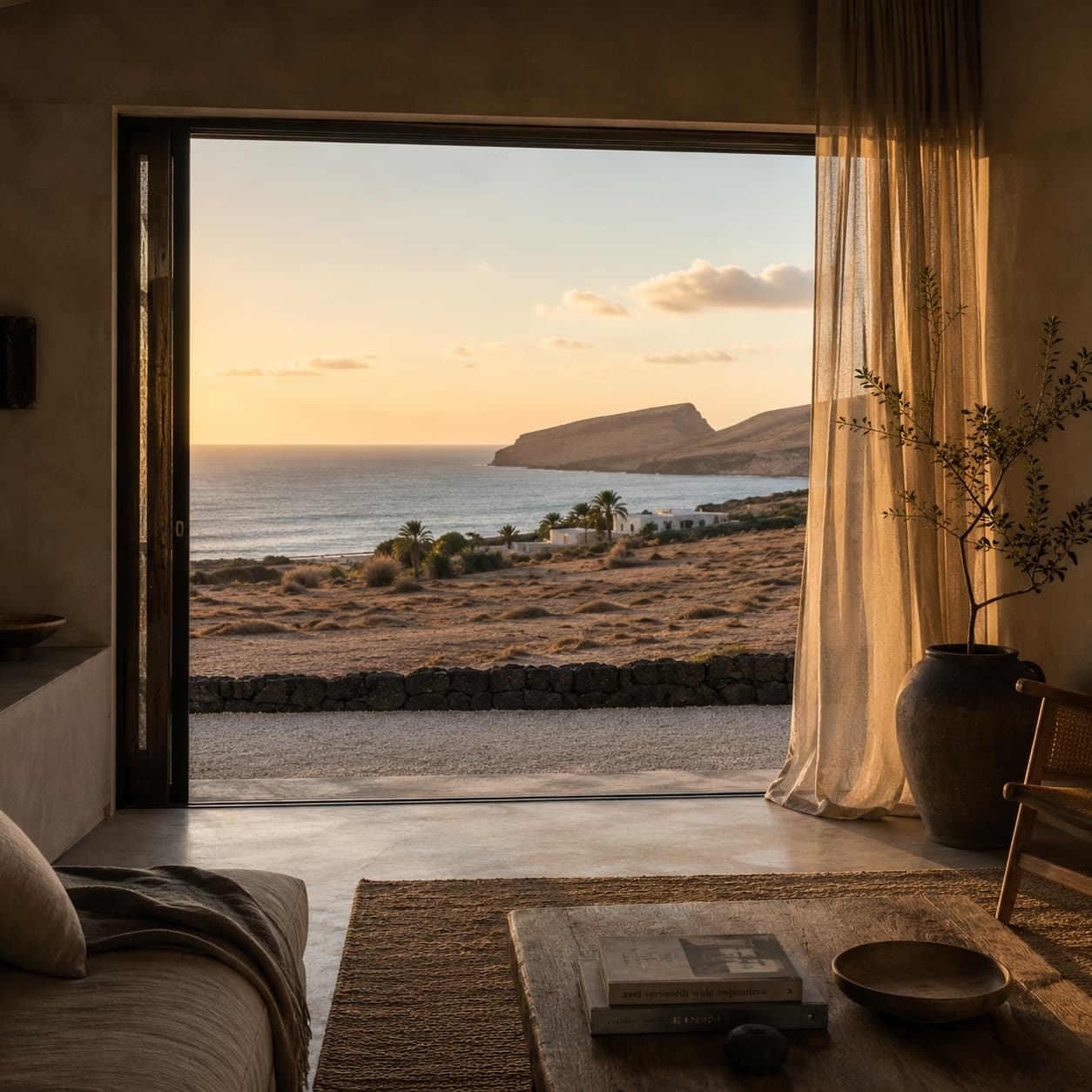
It is also, as it happens, how we built the KIVO collection: slowly, house by house, each one visited in person on the coast that earned it. Several of our homes sit within an easy morning of the walks above. Tell us which levada you have in mind, and we will tell you which coast to sleep on, and which house holds the sun for your return.
Written by