Everyone tells you Porto Santo is a day trip. The airline decided that, not the island. Binter's first flight leaves Funchal at half past seven in the morning and the last one comes back at half past seven in the evening, so twelve hours was the plan before you booked anything.
Stay one night and the island changes hands. The day visitors fly out at half past seven, and nine kilometres of beach belong to whoever stayed.
How long to give it
One night is the difference between seeing Porto Santo and being on it. Two if you play golf. Three if you came to rest properly, because by the third morning you stop checking the time. Families can make time for the long beach and unhurried days together. Children still need active adult supervision near the water.
The island is small and the choice is small with it — a handful of places to eat, one town, no motorways. That is the trade, and for most people who come back it turned out to be the appeal.
The beach is not a feature of the island. It is the island.
The sand runs for nine kilometres without a break along the south coast, on an island 11.4 kilometres long. You can walk for an hour and still be on the same beach. It is not a view you photograph. It is a distance you cover, slowly, usually barefoot.
It also does not behave like other sand. It is biogenic carbonate — made of marine organisms rather than ground rock — and it holds heat differently. People bury themselves in it to the neck, a practice old enough to have a name: psamotherapy. When a European panel put this beach first out of twenty-two in 2022, it led with the sand rather than the view. That is unusual, and it tells you what the island actually has.
What the days look like
Slow, on purpose. Mornings on the beach run long because there is nowhere you have to be. You will use the car for about two hours in total and then stop bothering with it.
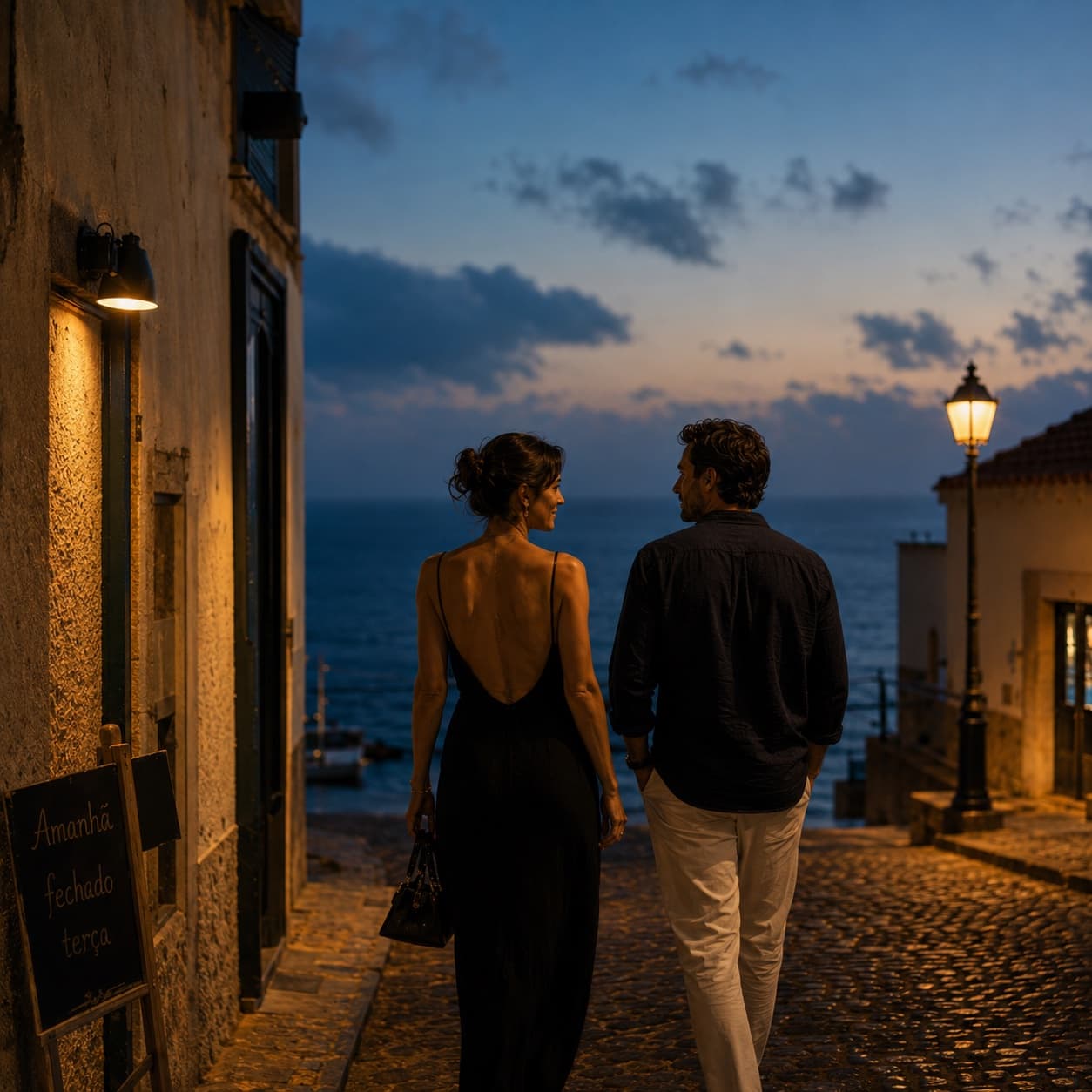
Drive up Pico do Facho once, at 517 metres, where the whole island is visible at once. Give Vila Baleira an evening: the square is the Largo do Pelourinho, and the Casa Colombo museum earns an hour for a reason most guides skip. Columbus married Filipa Moniz Perestrelo here in 1479, and her late father had been the island's first captain-donatary. He arrived a young sailor and left with the man's charts and logbooks. The museum also holds material from a Dutch East India Company galleon that went down north of the island in 1724.
Nobody arrives expecting the golf. Severiano Ballesteros designed the course, it opened in 2004, and the northern loop climbs onto basalt cliffs with three holes running along the coast.
The windmills you will photograph without meaning to. The first went up in 1794 to grind bread cereal, and there were once around thirty.
When to come
Almost any time. The island sits in the same Atlantic band as Madeira and the sea stays swimmable long after northern Europe has given up on the idea.
August is the one busy fortnight: Madeirans cross over for the summer and the resident population of a little over five thousand nearly triples. It is a good atmosphere if you want company. If you came for the empty version — the one the photographs are selling — come either side of it, and you will have the place close to yourself.
Nine kilometres, and after six most of it is yours
That is the whole argument for staying the night. Everything else on the island is a bonus: the golf, the view from the Facho, an evening in Vila Baleira, the sand that people travel here to lie in.
The last flight leaves at half past seven. Be on the beach when it does.
Written by
KIVO Editorial
The KIVO editorial team is dedicated to discovering and sharing the best stories from the islands, from architecture and design to authentic experiences and cultural encounters.