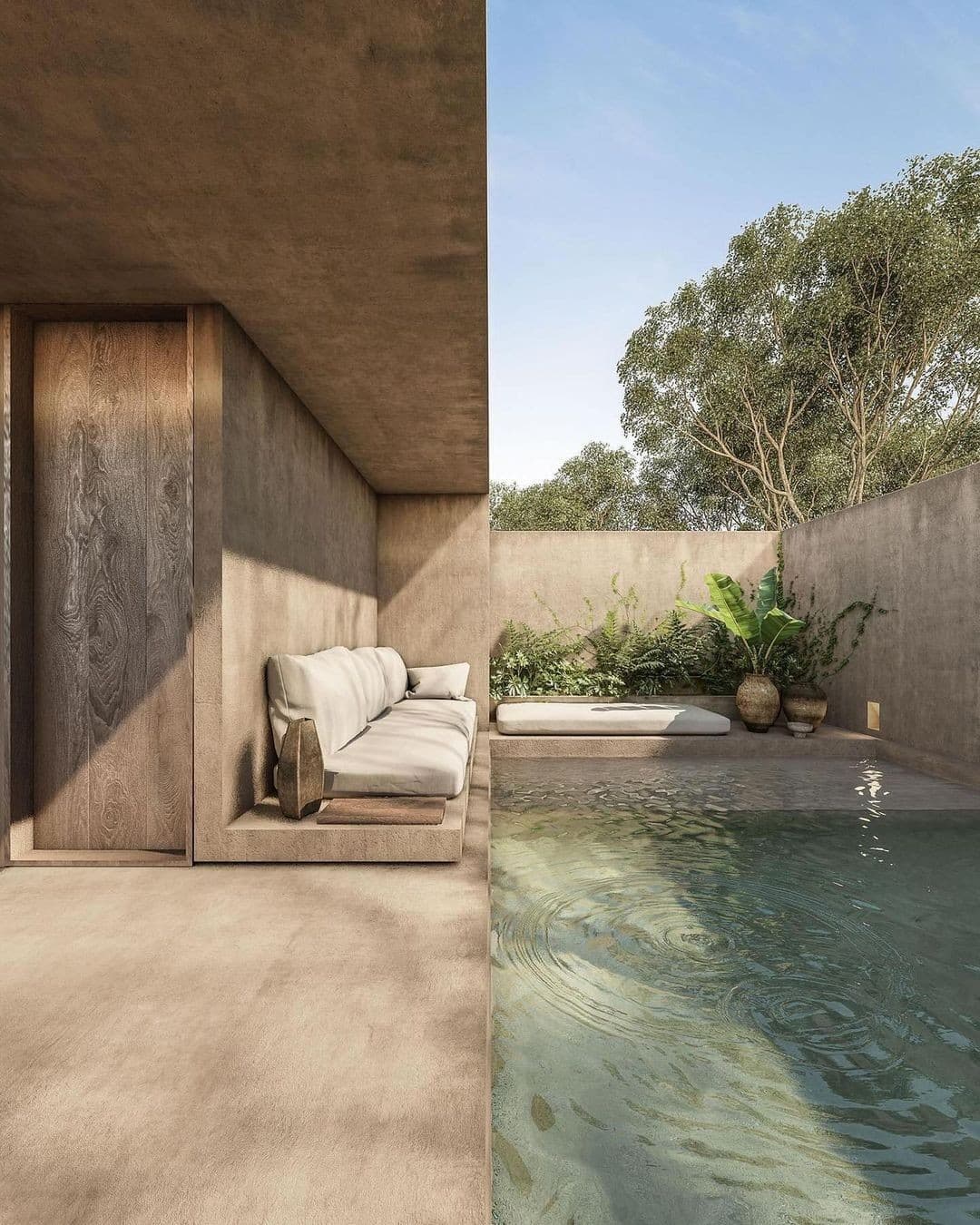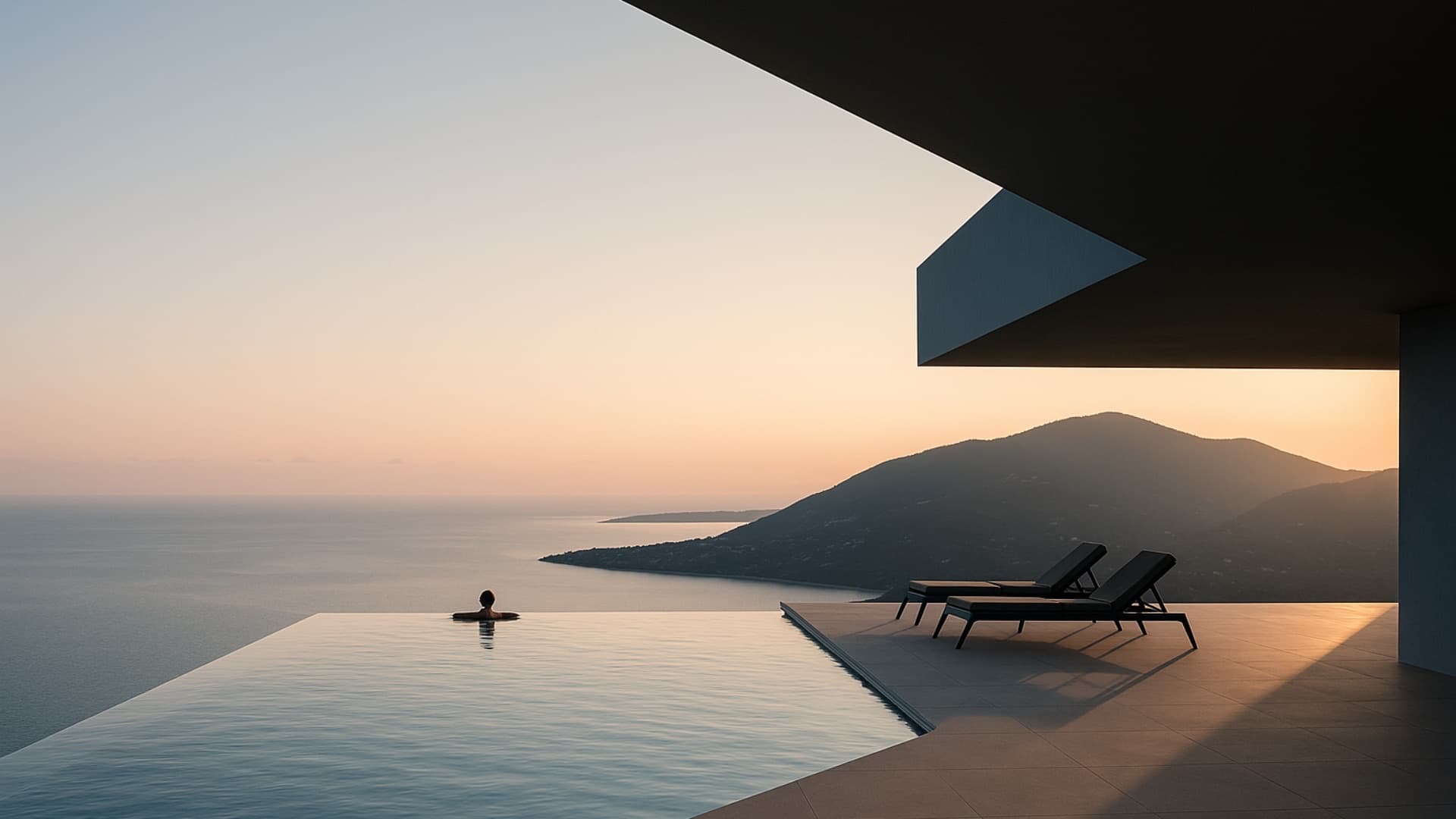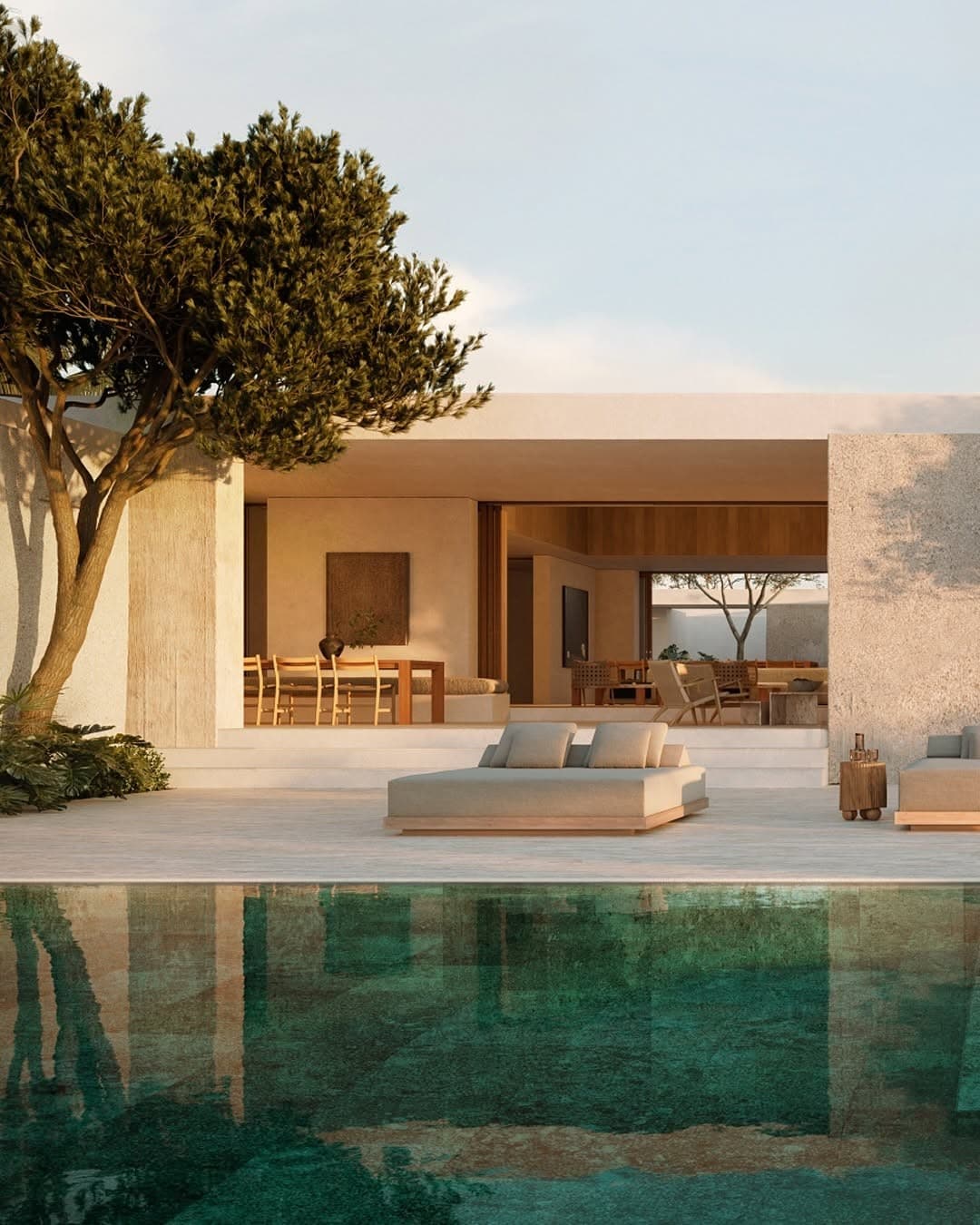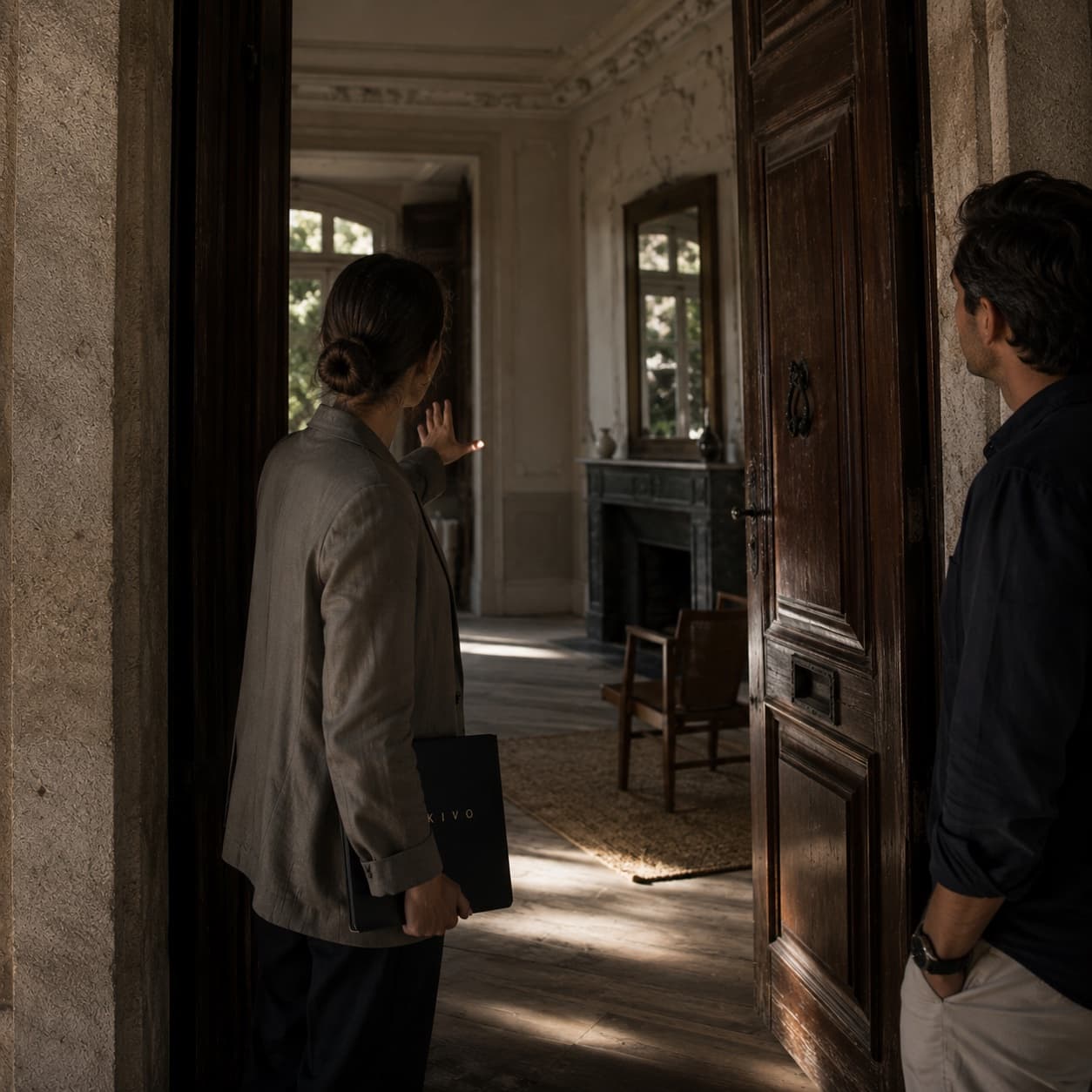
The owner said any day after ten would suit him. We came at eight forty. Not to catch anyone out: to catch the house before it had a chance to compose itself. A gravel track above the south coast, banana trees below, a gate that needed a shoulder. Inside, the shutters were still closed. We opened them one by one and stood in each room while the light arrived. That is the whole method, honestly. The rest is discipline.
We had already seen the photographs. Everyone has seen the photographs. Wide lens, blue hour, a bowl of lemons arranged by someone who does not live there. The photographs were good. That told us nothing. What told us something was the smell of the hallway, the neighbour's rooster, the way the kitchen tap coughed before the water ran clear. Small facts. Houses are made of small facts.
Because photographs lie and light does not
Every house in the KIVO collection is visited in person by our team before it is published. We walk it, open it, test it and sit in it, normally more than once, before a single guest can book it. No exceptions, no remote approvals, no houses taken on faith.
A camera can be talked into anything. It can widen a corridor, warm a cold room, crop the building site next door out of existence. Light cannot be negotiated with. At nine in the morning a room either holds the light or it does not. This is why we never accept a portfolio and a floor plan as evidence. We accept mornings.
What we actually test
Let us be precise, because vagueness is where trust goes to die. We do not promise that we sleep in every house: that would be a lovely lie, and we do not deal in those. What we do is spend the morning. We open every window and listen to what the room does with the sound. We run the hot water until it runs out, or does not. We stand under the shower and judge the pressure the way a guest at the end of a long flight would judge it. We press the mattress with an open hand, sit on the edge of every bed, and pull the curtains to see whether they actually close.
The terrace at nine and at six
We tell owners the day we are coming. We do not tell them the hour, so the house cannot be staged for its most flattering light. And we sit on the terrace twice: at nine in the morning with a coffee, and again at six in the evening, when the sun is low and honest. A terrace that only works at sunset is a photograph, not a terrace.
Silence is a question for the neighbours
There is one thing a morning visit cannot measure: the night. So we ask. We knock on doors, we talk to the neighbours, we ask what the street does after dark. Dogs, a bar, a quiet road that becomes a shortcut at midnight. People will tell you the truth about the street they live on far more readily than an owner will. It is not glamorous work. It is the work.
We walk through it first. We sit on the terrace. If we would not stay there ourselves, we do not list it.
What fails a house
The list is public and it does not move. Generic apartments. Chain hotels. Absent owners. Mass-market rentals. A house can be beautiful and still fail: if nobody answers when we telephone the owner twice, that is the answer. If a place could be anywhere, it should not be here. And if what you want as a traveller is a lockbox code and no human being on the other end, we are honestly not for you: there are cheaper ways to be alone.
The curator note on every page
When a house passes, one of us writes the note that appears on its page. It is short, it comes from the visit, and it includes the inconvenient parts: the road is steep, come by car, the third bedroom is small and perfect for a child rather than a couple. We write it because a guest who arrives with the right expectations is a guest who leaves in love with the house. Flattery is a refund waiting to happen.
Visited, with a date
Every house in the collection carries the Visited seal, with the date of our last visit. The date matters more than the seal. Houses change: owners repaint, mattresses age, a building site can appear across the valley. The seal is not a trophy, it is a timestamp, and when it grows old we go back.
Why we say no more often than yes
Most of the houses we visit do not enter the collection. That is not a boast, it is arithmetic: a collection is defined by what it leaves out. Every yes we give spends a little of the trust the previous yes earned, so we spend slowly. Madeira does not need another long list of places to sleep. It needs a short list that someone is willing to sign.
If you are a traveller, the result of all this is simple: every house in the collection has been walked, tested and argued over before it reached your screen, so browse the collection knowing that. And if you own a house in Madeira or Porto Santo that you believe would survive a nine in the morning visit, tell us about it through Join the Collection: we will come, unannounced hour and all, and we will sit on your terrace twice.
Written by