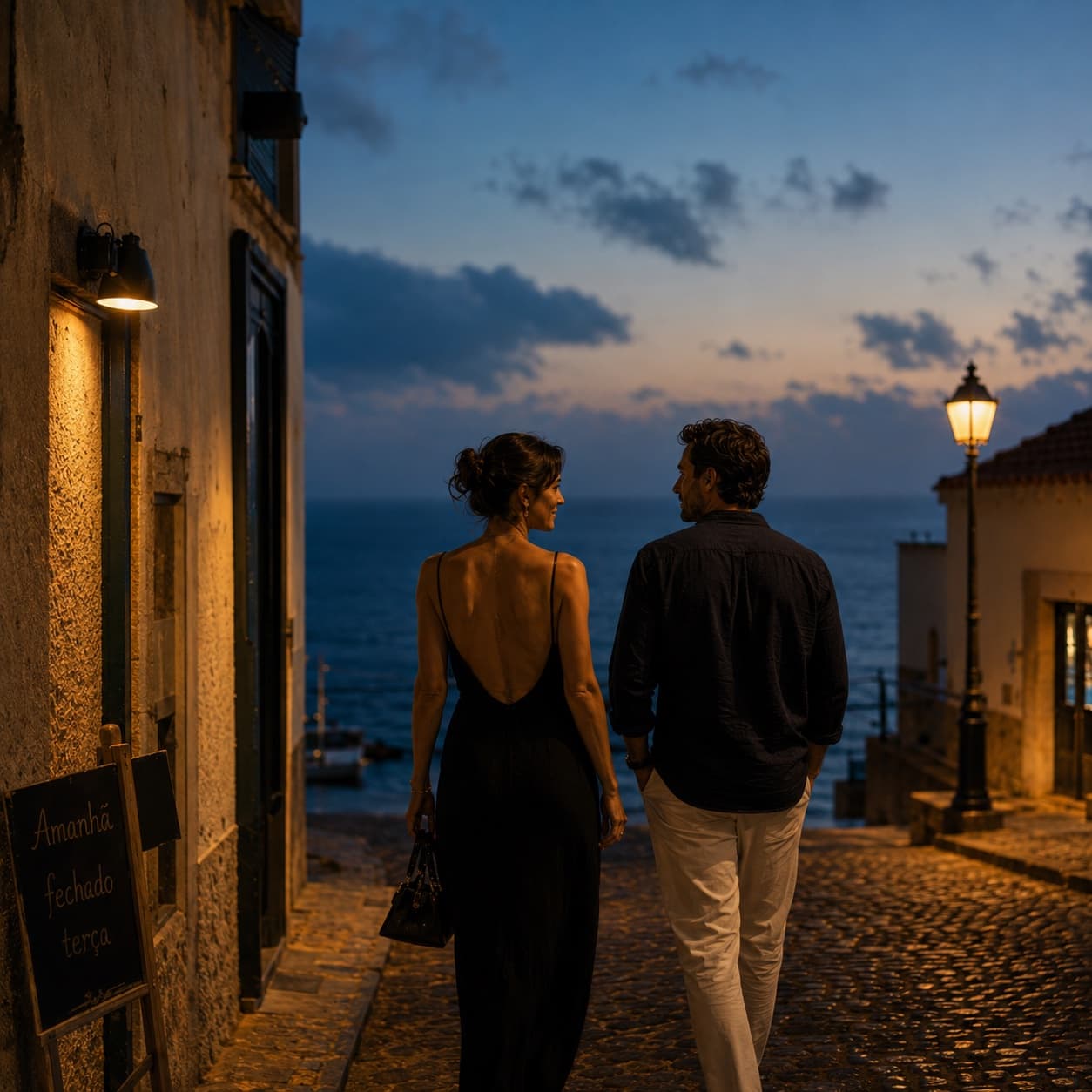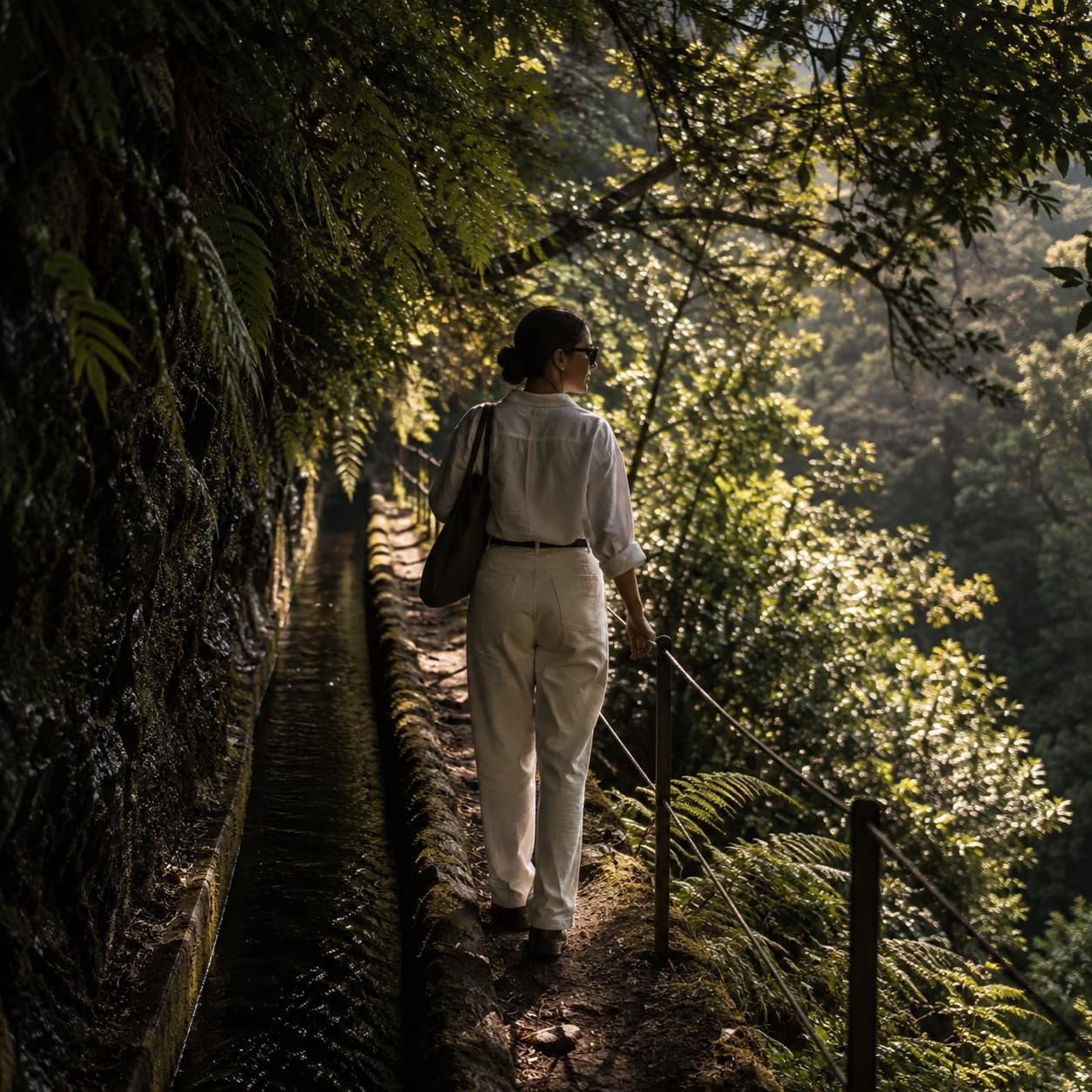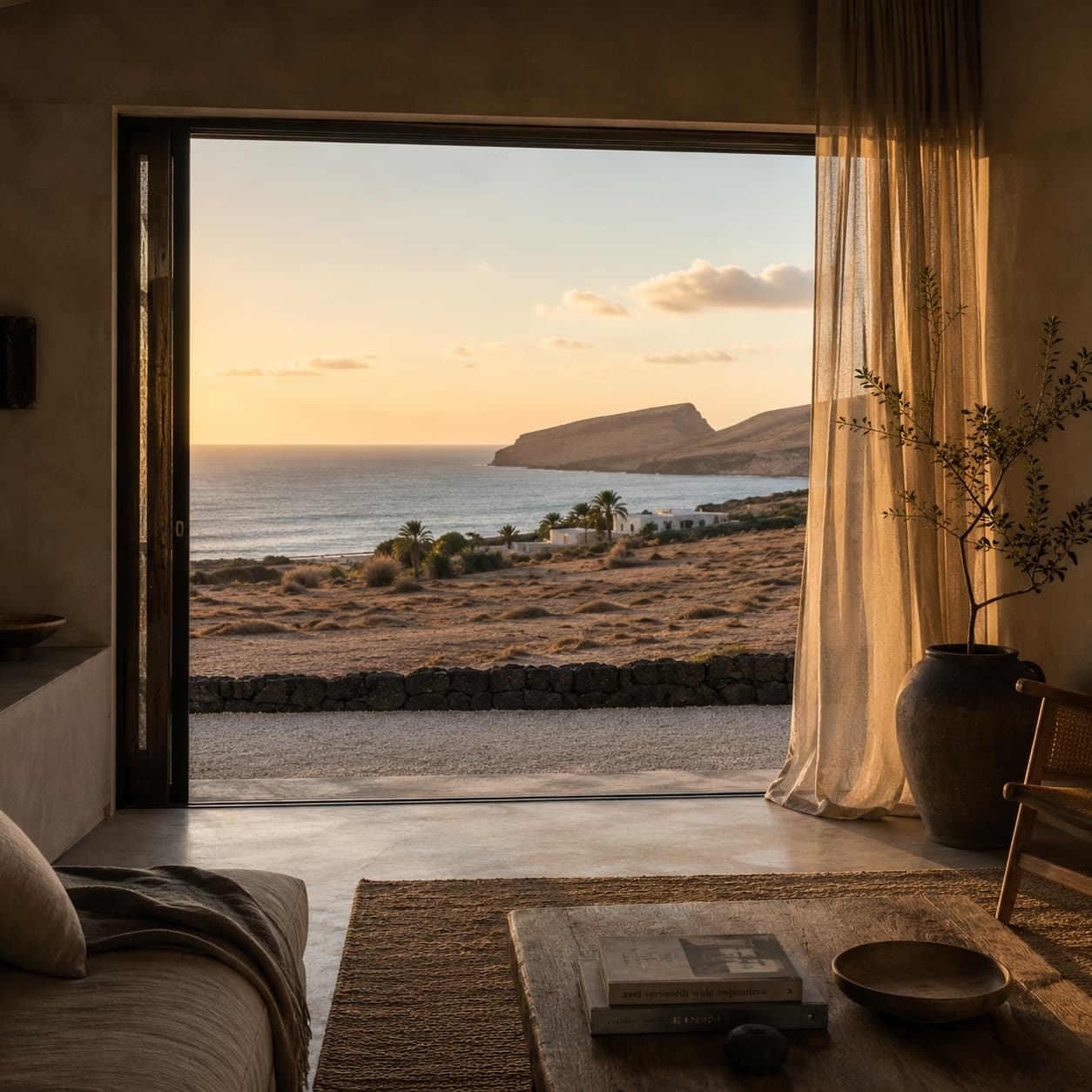
Some forty kilometres of open Atlantic separate Madeira from a different island logic. Madeira is vertical, furiously green, a landscape that is always on stage. Porto Santo is horizontal, dry, golden, and quiet to a degree that first-time visitors mistake for emptiness. Most travellers to the archipelago never make the crossing. That, we would argue, is precisely the case for making it.
Honesty first, because this island deserves it and rarely gets it. Porto Santo has one beach, one town, a modest roster of restaurants and a landscape closer to a dune than to a garden. If your holiday needs a new table every night, a bar district, or the dramatic green that fills Madeira postcards, this is not your island. We would rather say so now than after the ferry.
Is Porto Santo worth visiting?
Porto Santo is worth visiting for one thing done to perfection: nine kilometres of continuous golden sand, the beach Madeira famously does not have, attached to an island that has made silence its principal asset. Come for the sand, the sea and the calm. Do not come for variety, nightlife or drama.
Madeira gives you a hundred things to do. Porto Santo gives you permission to do none of them.
The Porto Santo beach: nine kilometres, no interruptions
The numbers undersell it. From Vila Baleira the sand runs south-west in a single unbroken arc to Ponta da Calheta: nine kilometres of fine golden beach shelving gently into water that works through every blue the Atlantic owns. There are no coves to hunt for and no tide charts to consult. You walk down, you choose your hundred metres, and outside August you will usually have them to yourself.
The sand itself carries a reputation. It is calcareous, biogenic, and locals have buried aching joints in it for generations, a practice the island takes seriously enough to offer in organised form. Its therapeutic properties are reputed rather than promised, and we will leave the clinical claims to others. What we can promise is the effect of three unhurried hours on it, which no laboratory has yet managed to bottle.
For context, Madeira's own coastline is pebble, rock and engineered lidos, handsome in its way and honest about what it is. The archipelago, in effect, split the inheritance: one island took the mountains, the waterfalls and the green, and the other took the entire beach. Nine kilometres of it, against a backdrop of bare ochre hills that would look Moroccan if the Atlantic were not so insistently present.
How to get to Porto Santo
Two honest options. The Porto Santo Line ferry sails from Funchal in around two hours and fifteen minutes, normally once a day, with extra crossings in summer and maintenance pauses in winter, so check the schedule before you build plans on it. The ship takes cars, which matters: your own car is the easiest way to reach the quieter western end of the beach.
The alternative is the small propeller plane from Madeira, roughly twenty five minutes of archipelago seen from above. It is quicker and it is beautiful. We still recommend the boat in at least one direction: two hours of open water is the correct decompression chamber between an island that demands attention and an island that asks for none.
When to go: the high season is local
Here is the detail most guides never mention: Porto Santo's high season is local. In August, Madeira migrates. Families cross on full boats, the beach fills with parasols from Funchal, and Vila Baleira acquires something close to bustle. It is charming and it is real, but it is the one month in which the advantage of silence is suspended.
September and October are the island's quiet triumph: the sea at its warmest, normally close to twenty three degrees, the sand emptied of school holidays, the light long and low. Winter is honest and windswept, and many restaurants close, which we consider fair warning rather than a flaw. The archipelago's calendar has a logic of its own, and we have mapped it month by month.
Where to stay in Porto Santo
The decision is simpler than on Madeira, because only one side of the island has ever mattered for sleeping: the south, where the beach is. Stay in or near Vila Baleira and you can walk to the cafes, the pier and the sand in minutes. Stay further along the beach road toward Ponta da Calheta and you trade the town for emptier sand and the sunset end of the island.
The interior and the north are magnificent to drive and no place to base yourself: dry peaks, one startling viewpoint after another, and almost nothing in the way of supporting cast. This is not a criticism. It is the island's entire design: one golden edge for living, and a wild interior that exists to be looked at.
What there is to do on Porto Santo, honestly
Little, and that is the luxury. Climb Pico do Castelo or Pico do Facho, the island's highest point at around five hundred metres, for the view that explains the whole geography in one turn of the head. Walk down to Zimbralinho, a small rocky cove with some of the clearest water in the archipelago. Cycle the flat coastal road. That is most of the list, and it is meant to be.
Add two footnotes. The golf course, signed by Seve Ballesteros, is considered by those who know it one of the more scenic places in Portugal to lose a ball, though we defer to golfers on the technicalities. And in Vila Baleira, the modest museum in the house where Christopher Columbus reputedly lived is worth half an hour, if only for the strangeness of the footnote itself.
What Porto Santo offers instead of a programme is a set of conditions. Air that carries no traffic. Nights dark enough to relearn the stars. Mornings in which the loudest event is the ferry announcing itself in the bay. We have taken to calling this the advantage of silence, and we mean it literally: it is the one amenity that cannot be built, imported or added in a renovation.
A day trip or a week?
The day trip exists, and we will not pretend otherwise: ferry over in the morning, hours on the sand, ferry back. It works, and it entirely misses the point. Porto Santo only begins to function when the day boat leaves, the beach exhales, and you realise that nothing is scheduled for tomorrow either. The island is not a sight to be seen. It is a pace to be borrowed.
Our honest prescription is the split stay: Madeira for doing, Porto Santo for undoing. A week across the two islands, with the quiet one placed last, sends you home with a different nervous system from the one you arrived with. Where to base the Madeira half is a decision of its own, and we wrote the honest guide to it.
A house or a hotel?
Porto Santo's hotels line up along the beach and do their job. But this island, more than almost anywhere we work, argues for a house: silence is a private good, and it is at its best with your own kitchen, your own terrace and no corridor noise at eleven at night. The KIVO collection includes a home on Porto Santo, personally visited and chosen the way we choose everything: slowly, and in person.
So, the honest summary. Come if nine kilometres of golden sand and the advantage of silence sound like wealth. Stay on Madeira if you need noise, novelty and dinner reservations. And if the quiet island is calling, tell us your dates and we will tell you whether the house is free: direct booking, a local team, and an island that asks nothing of you at all.
Written by