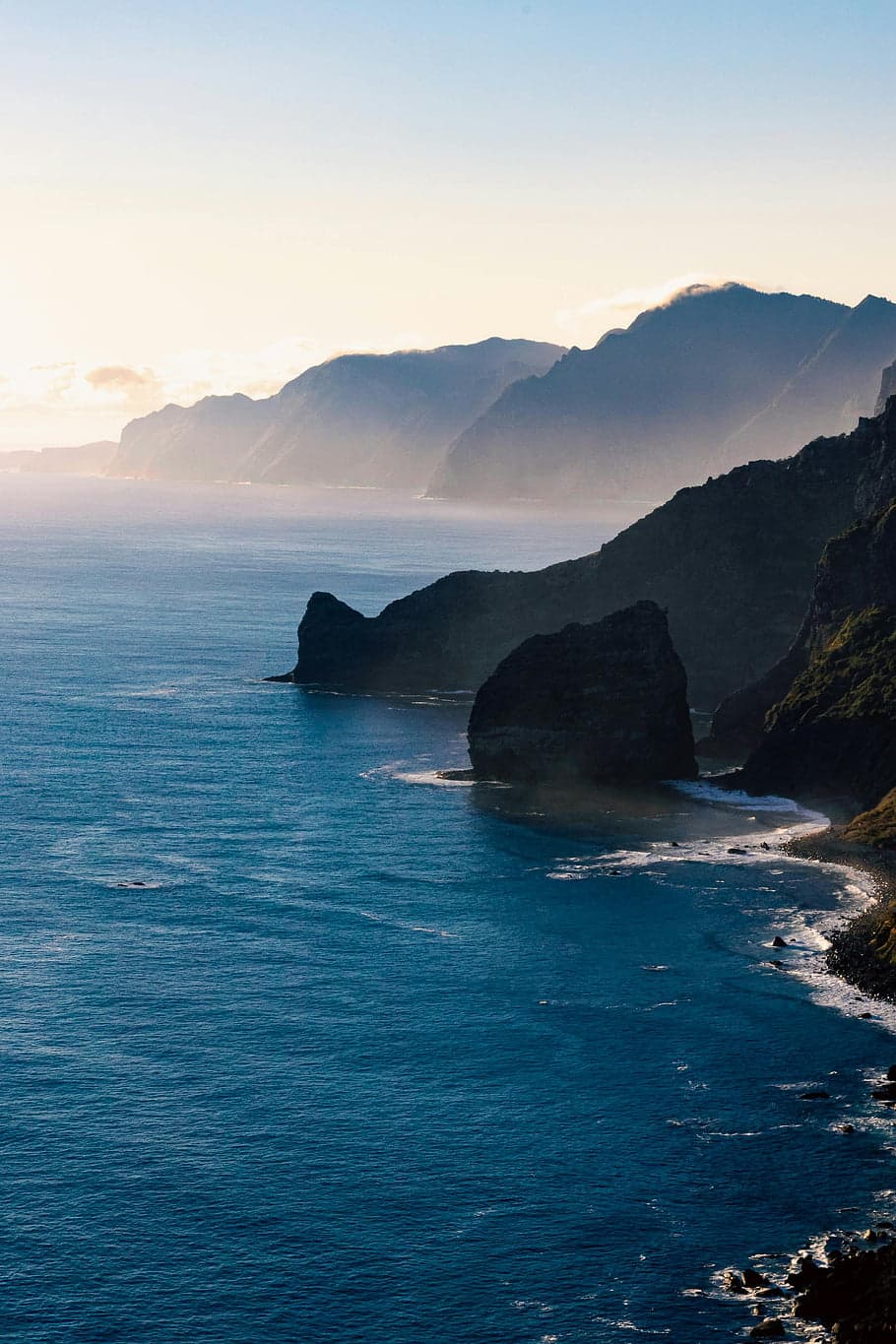
Halfway over the Encumeada pass, the cloud closes in and the temperature drops about six degrees. There is a tavern at the roadside. Inside, a man in a wool cap beats something in a glass with a short wooden stick, fast, as if he were angry at it. He is not angry. He is making your poncha.
If you are looking for a cocktail list, a garnish, a bartender with tweezers, stop reading now: Funchal's hotel bars will take excellent care of you. Poncha is not a cocktail. It is a small, serious ritual with three ingredients and no patience for decoration.
What exactly is poncha, Madeira's island drink?
Poncha is Madeira's drink: aguardente de cana, the island's own sugar cane spirit, beaten with bee honey and fresh lemon until it froths. It is mixed to order with a wooden tool called a mexelote, served without ice, and drunk standing up. It is stronger than it tastes. Considerably.
Three ingredients, no shortcuts
Start with the spirit. Aguardente de cana is rum's island cousin, pressed from cane that still grows on Madeira's warm lower slopes and distilled at a handful of working mills. It normally runs somewhere between forty and fifty degrees of alcohol. Remember that number. The honey is bee honey, not the dark cane molasses that goes into the island's bolo de mel. The lemon arrives twice: juice for the acid, peel for the perfume. That is the entire recipe. Everything else is conversation.
The mexelote, and the name we do not print
The tool matters. A mexelote is a short stick of wood carved with a flared foot, part muddler, part whisk. It crushes the lemon peel, dissolves the honey, whips air into the spirit. Locals have another name for it, older and considerably less polite, and we are not going to print it here. Ask whoever is behind the counter. They will tell you, and they will enjoy telling you.
Câmara de Lobos, where the story is said to begin
The word poncha, it is said, is a cousin of punch, carried home along the old sea routes from the East. The drink itself belongs, by common agreement, to the fishermen of Câmara de Lobos: men who went out before dawn, came back cold with salt in their clothes, and needed something that worked as medicine, heating and courage in a single glass. True or embroidered, the village still pours the standard against which every other poncha is measured.
Nobody drinks poncha sitting down. Sitting down is what comes after.
Tradicional, regional, and where tradition ends
Order a poncha tradicional and you get the trinity: spirit, honey, lemon. Order a regional and orange juice joins the lemon, softer, easier, the version many islanders now treat as the house pour. Then come the moderns: tangerine, passion fruit, whatever the counter had ripe that week. We say this with genuine affection: they are delicious, and they are fruit drinks with aguardente inside. Tradition ends at the lemon. Everything after that is pleasure, which is also allowed.
Where to drink it seriously: Câmara de Lobos and the Encumeada road
Two pilgrimages. First, Câmara de Lobos itself: the small counters around the harbour, where the drink was reputedly invented and is still treated as a civic duty. Second, the mountain road through Serra de Água towards the Encumeada pass, where roadside taverns have made poncha a regional institution: peanut shells underfoot, glasses that arrive with a bowl of peanuts whether you asked or not. We could print names. We will not, deliberately: the counter you end up at, wherever the fog stops you, will do the job.
How to order like a local
Walk to the counter. Say uma poncha de limão, or uma regional if you want the orange. Do not ask for ice and do not ask for it quickly: the mexelote is the whole show, and it happens in front of you. Accept the peanuts. Listen for the sound, wood against glass, honey giving in. When the sound stops, the drink is ready. So is the conversation.
The rule: standing up, talking
Poncha is drunk standing, glass on the counter, elbow room negotiable. It is a social contract, not a tasting flight. And here is the honest warning, because the honey and lemon are excellent liars: the spirit underneath normally sits between forty and fifty degrees. The first poncha is a conversation. The second is a decision. The third makes your decisions for you. Locals sip slowly, eat while they drink, and walk home. Copy all three habits.
A drink for Madeira's cool season
Poncha is weather-dependent, and the weather it wants is bad. It belongs to fog on the pass, to rain hammering the north coast, to the short bright days between October and March when the island exhales and belongs to itself again. Madeira keeps two great answers to a cold evening, and the other one has been ageing in barrels above Funchal for some two centuries. Drink both in the same week and you will understand this island faster than any museum could manage.
Every KIVO house sits within easy reach of a serious counter, and our local team will point you to theirs: not the famous one, the one where they actually stand. If the cool season tempts you, our Off-Calendar windows exist precisely for those months. And if you want these guides before anyone else reads them, THE KIVO TRAVELLER newsletter below is the way in.
Written by